

Why Is My Kitchen Sink Blocked? Common Causes and What to Do
September 11, 2026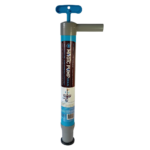
Plunger not working? Discover a different way to unblock your drains
September 30, 2026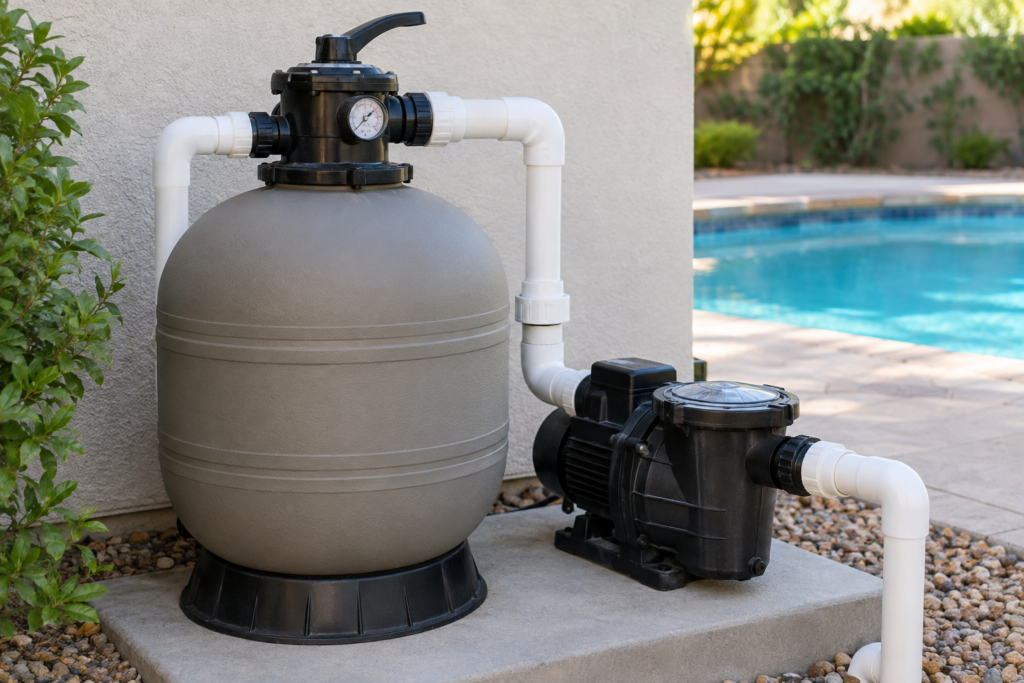
Your pool’s sand filter works quietly in the background, trapping dirt and other particles as water passes through the filter media. Backwashing removes much of the accumulated dirt, but the sand itself can eventually become compacted, contaminated or difficult to clean effectively.
Changing pool filter sand is not necessarily complicated, but it can be a heavy and messy job. This guide explains how to recognise possible filter-media problems, prepare for a sand change and complete the job without damaging the filter’s internal components.
Does pool filter sand need to be changed regularly?
There is no single replacement schedule that applies to every swimming pool. The condition of the sand depends on the filter model, pool usage, water balance, environmental conditions and how the filtration system has been maintained.
Before replacing the sand purely because of its age, check whether the problem could be caused by:
- An incorrect water balance
- Insufficient filtration time
- A blocked pump or skimmer basket
- A faulty pressure gauge
- An incorrect multiport-valve setting
- Poor circulation
- A filter that needs backwashing
- Damaged laterals or another internal component
Consult the filter manufacturer’s manual before deciding whether the filter media needs replacing.
Signs that the filter sand may need attention
Possible warning signs include:
- Cloudy water returning soon after backwashing
- Noticeably weaker circulation
- A pressure reading that behaves differently from the filter’s normal clean pressure
- Sand that has formed hard clumps or a crusted surface
- Visible channels through the sand bed
- Sand returning to the swimming pool
- Difficulty restoring normal filtration after backwashing
Sand entering the pool can also indicate a damaged lateral or standpipe, so replacing the sand alone may not solve the problem.
Backwashing and changing the sand are different jobs
Backwashing reverses the flow of water through the filter to lift trapped dirt from the sand bed and send it to waste. It forms part of normal filter maintenance.
A sand change involves opening the filter, removing the existing media, inspecting the internal components and loading the correct quantity and grade of new filter media.
Avoid backwashing according to an arbitrary calendar alone. Use the filter manufacturer’s instructions, the pressure gauge and changes in water flow to guide you. Backwashing too frequently can also reduce filtration efficiency.
What you need before starting
Gather everything before opening the filter:
- The filter’s installation or owner’s manual
- The correct type and quantity of replacement filter media
- Basic hand tools suitable for your filter
- A hose and suitable drainage area
- Containers or strong bags for the old sand
- Protective gloves and suitable footwear
- Replacement seals or lubricant if specified by the manufacturer
- A safe method of removing the old sand
Pool filter sand is heavy, particularly when wet. Plan where you will place it and how it will be disposed of before beginning.
How to change pool filter sand
The exact procedure varies between filter models. Always follow the instructions supplied by the filter manufacturer.
1. Switch everything off
Turn off the circulation pump and isolate its power supply. Disable automatic timers so the pump cannot start while the filter is open.
Never move a multiport-valve handle while the pump is running.
2. Release the pressure
Open the filter’s air-relief mechanism if fitted and confirm that the pressure gauge has returned to zero. Drain the filter according to its manual.
Never attempt to open a pressurised filter.
3. Photograph the existing connections
Take a few photographs before disconnecting pipes, hoses or the multiport valve. This gives you a useful reference when reassembling the system.
4. Open the filter carefully
Remove the valve, lid or clamp according to the manufacturer’s instructions. Protect the centre standpipe so sand cannot fall into it.
Do not force plastic fittings. Older components may have become brittle through age and exposure.
5. Remove the old sand
This is often the most time-consuming part of the job. The sand can be removed manually in small amounts, extracted with suitable equipment or removed using a purpose-designed solution.
The Magic Pump is designed to help remove old filter sand in a more controlled way. It can reduce the amount of manual scooping required and help direct the removed material where you want it to go.
Whichever method you use, work carefully around the standpipe and laterals at the bottom of the filter. These components can be damaged by tools or rough handling.
Learn more about the Magic Pump
6. Inspect the inside of the filter
Once the old media has been removed:
- Inspect the laterals for cracks or damage
- Check the standpipe and diffuser
- Examine accessible seals and O-rings
- Remove remaining debris
- Check the filter body for visible damage
Replace damaged parts before adding new media.
7. Add water before the new filter media
Many filter manufacturers instruct users to partially fill the vessel with water before adding the new media. The water cushions the laterals and helps protect them from the weight of falling sand.
Follow the level specified in your filter manual.
8. Add the correct media
Use only the grade and quantity stated by the filter manufacturer. Ordinary building or play sand is not a substitute for approved pool-filter media.
Keep the standpipe centred and covered while adding the media. Add it gradually rather than emptying an entire bag into one spot.
9. Reassemble the filter
Clean the sealing surfaces and refit the valve, lid, clamp and connections according to the manual. Check that seals are seated correctly and avoid overtightening plastic components.
10. Backwash and rinse
After adding new sand, the filter normally needs to be backwashed to waste and then rinsed before being returned to its normal filter setting.
Switch the pump off before every change of the multiport-valve position. Follow the manufacturer’s specified backwash and rinse procedure.
11. Check the completed job
Once the system is operating:
- Inspect every connection for leaks
- Check the pressure reading
- Confirm that water is returning to the pool normally
- Look for sand entering the pool
- Record the clean operating pressure for future reference
Common sand-change mistakes
Avoid these common problems:
- Opening the filter before releasing its pressure
- Allowing an automatic timer to restart the pump
- Moving the multiport valve while the pump is running
- Using the wrong grade or quantity of media
- Leaving the standpipe uncovered
- Damaging the laterals while removing old sand
- Adding dry media directly onto unprotected laterals
- Returning immediately to filter mode without backwashing and rinsing
- Assuming that every filtration problem is caused by old sand
Make the most awkward part easier
Removing wet, compacted sand is often the part people least look forward to. Choosing a controlled removal method can reduce physical effort and help keep the work area manageable.
The Magic Pump provides a practical alternative to removing every scoop of sand by hand.
Frequently asked questions
Can I use ordinary sand in a pool filter?
No. Use the filter media type, grade and quantity specified by the filter manufacturer.
Why is sand entering my pool?
Possible causes include a damaged lateral, standpipe or another internal component. Inspect the filter before simply replacing the media.
Should I change the sand if my pool is cloudy?
Not automatically. Check the water balance, circulation, filtration time, pressure, baskets and backwashing requirements first.
Do I need to backwash new sand?
Most sand-filter instructions require an initial backwash followed by a rinse. Follow the procedure in your filter manual.
Can I change pool filter sand myself?
That depends on your experience, the filter design and whether you can isolate and open the equipment safely. Ask a qualified pool professional if you are uncertain.
A final check before starting
Locate the correct filter manual, purchase the specified media and plan how the old sand will be removed and disposed of. Good preparation makes the job safer, cleaner and considerably easier.


